

The Hidden Cost of Phubbing Our Kids
- arielbmendelson
- Sep 15, 2025
- 1 min read
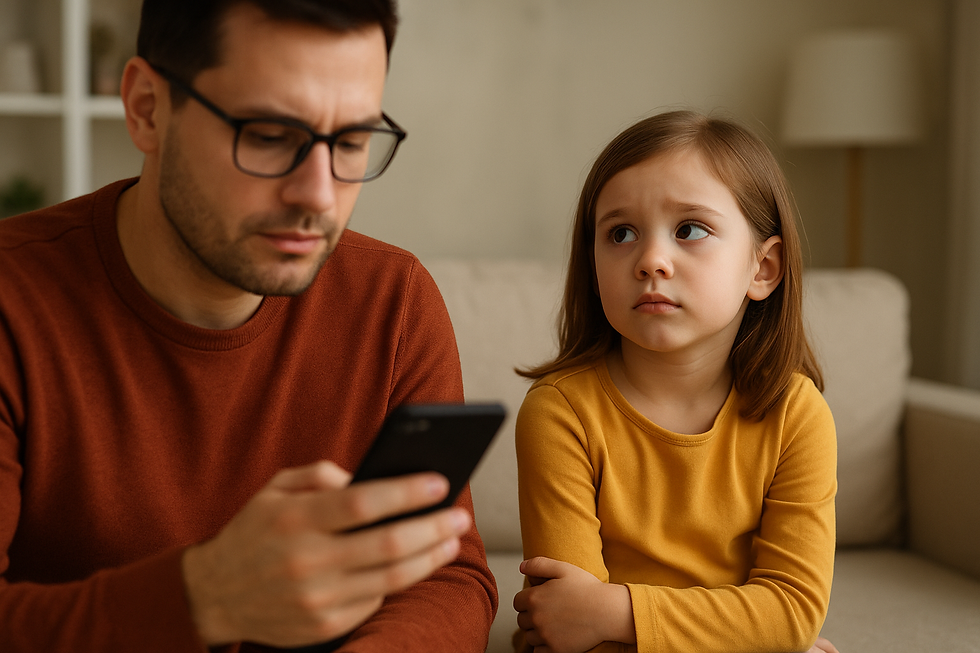
Have you ever had your child come up to you, ready to share something exciting, and you catch yourself half-listening while scrolling your phone? We’ve all been there. It’s called phubbing—snubbing someone in favor of your phone—and while it feels small in the moment, it can leave a big imprint on our kids.
When children try to connect with us, they’re not just passing time—they’re building their sense of worth, security, and belonging. If they’re met with a distracted gaze at a screen, the unspoken message can sound like, “That device matters more than me.” Even if that’s the furthest thing from our intention, kids often interpret it that way.
Over time, these little moments stack up. Research shows that kids who feel consistently overlooked may act out more, withdraw, or even start to seek attention in less healthy ways. Their developing brains are wired to look for cues about whether they matter, and our presence—or lack of it—speaks volumes.
So what can we do? The answer isn’t to toss our phones in the trash (though it might feel tempting some days!). It’s about parenting with intention. That might mean putting the phone down when your child starts to talk, carving out screen-free family times, or even narrating your choices: “I need two minutes to send this message, then I’m all yours.”
It’s not about perfection—it’s about connection. Every time we choose eye contact over screen contact, we send the message: “You’re more important. I see you. I hear you.”
And that’s the message their growing brains—and hearts—need most.


Comments